



Retained WordPress support services exist because unmaintained WordPress sites are one of the most common security targets on the internet, not because we’re padding an invoice.
Most WordPress web design services promise a good-looking website and stop there. A site that looks polished but loads slowly, ranks nowhere, and can’t be updated without calling a developer every time isn’t doing its job. As a full-service WordPress design agency, we build custom WordPress websites that solve all three problems at once: fast, search-ready, and easy for your own team to manage after launch — whether you’re a small business, a growing ecommerce brand, or an enterprise WordPress development project.
WordPress powers roughly 42% of all websites on the internet — more than nine times the share of its closest competitor (W3Techs, 2026). That’s not a coincidence. It’s the result of three things businesses consistently need:
We design every build mobile-first, meaning the phone layout is the starting point, not an afterthought squeezed in at the end. This matters for more than looks: Google uses mobile-first indexing, which means it primarily evaluates the mobile version of your site to decide how it ranks — even for people searching on desktop. A responsive WordPress design that merely “doesn’t break” on mobile is a different, lower standard than one built mobile-first from the start, and it’s why mobile-friendly WordPress websites and fast-loading pages go hand in hand.

WordPress’s editing interface means your team can update text, swap images, and
publish new pages without calling a developer every time. You’re not dependent on us for
routine changes.
Your website, your content, and your code all belong to you — not to a
proprietary builder that locks you in. If you ever want to change agencies, move hosts, or
take development in-house, you can take your entire site with you. That’s not true of
closed platforms like Wix or Squarespace, where your site only exists inside their system.
With over 60,000 plugins and an open-source core, WordPress can grow
from a five-page brochure site into a full online store, membership portal, or multilocation business site — without a platform migration.
We build custom on top of WordPress specifically because it gives you the openness of
ownership with the maturity of a platform that isn’t going anywhere.
Every project starts with a business problem, not a color palette. One client needed a site that could handle a growing product catalog without slowing to a crawl. Another needed a WordPress website redesign that would finally show up on page one for their core service keywords, not just look better than the old one. Both are the kind of problem custom WordPress website design is actually built to solve.
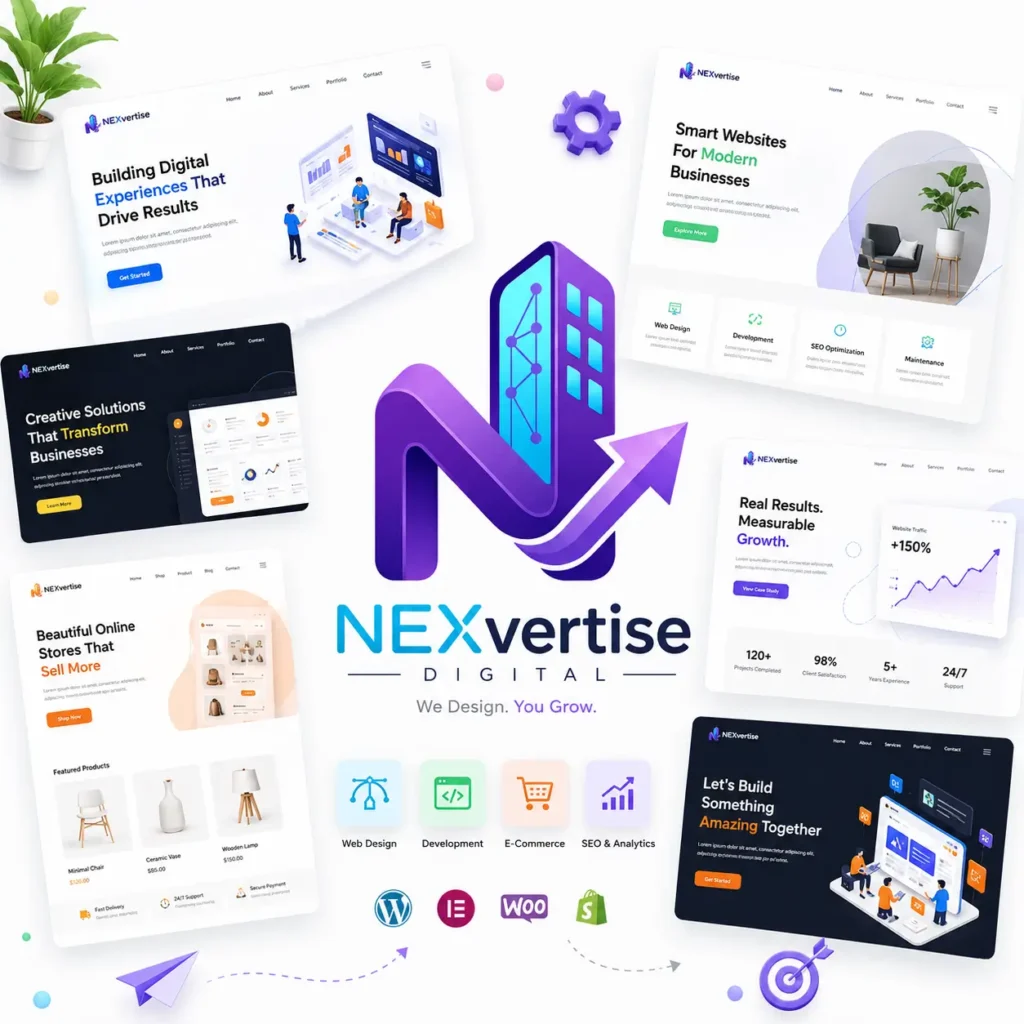
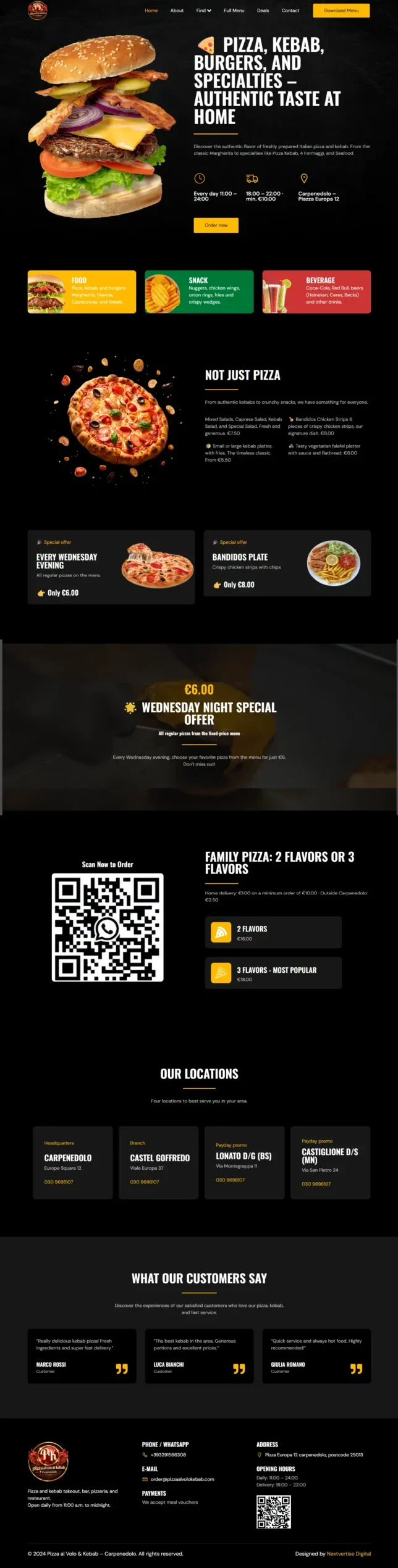
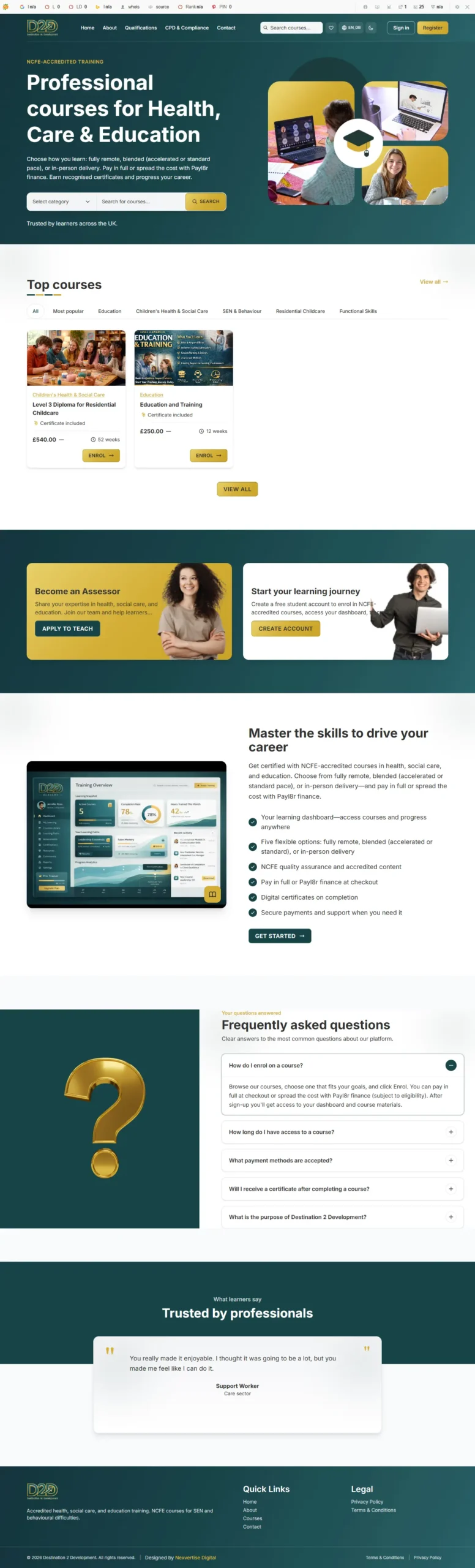
This is where a real portfolio belongs: screenshots, live links, and — where clients have agreed to share them — actual traffic or conversion numbers. We’d rather show a handful of verifiable results than a wall of vague “beautiful design” claims that don’t tell you anything about outcomes.


Local restaurant needed fast mobile ordering; built a high-speed, custom WordPress menu.


Training platform required seamless enrollment; custom WordPress build boosted sign-ups by 40%.


Marketing consultant lacked clear lead generation; engineered a sleek WordPress site doubling conversions.
If you’re comparing WordPress web design services to find the best fit rather than the first agency that shows up, ask to see a project similar to your own industry — we can usually point to at least one comparable build from recent work.

Organic traffic lift
Lower bounce rate
Faster load time
Hidden Fees
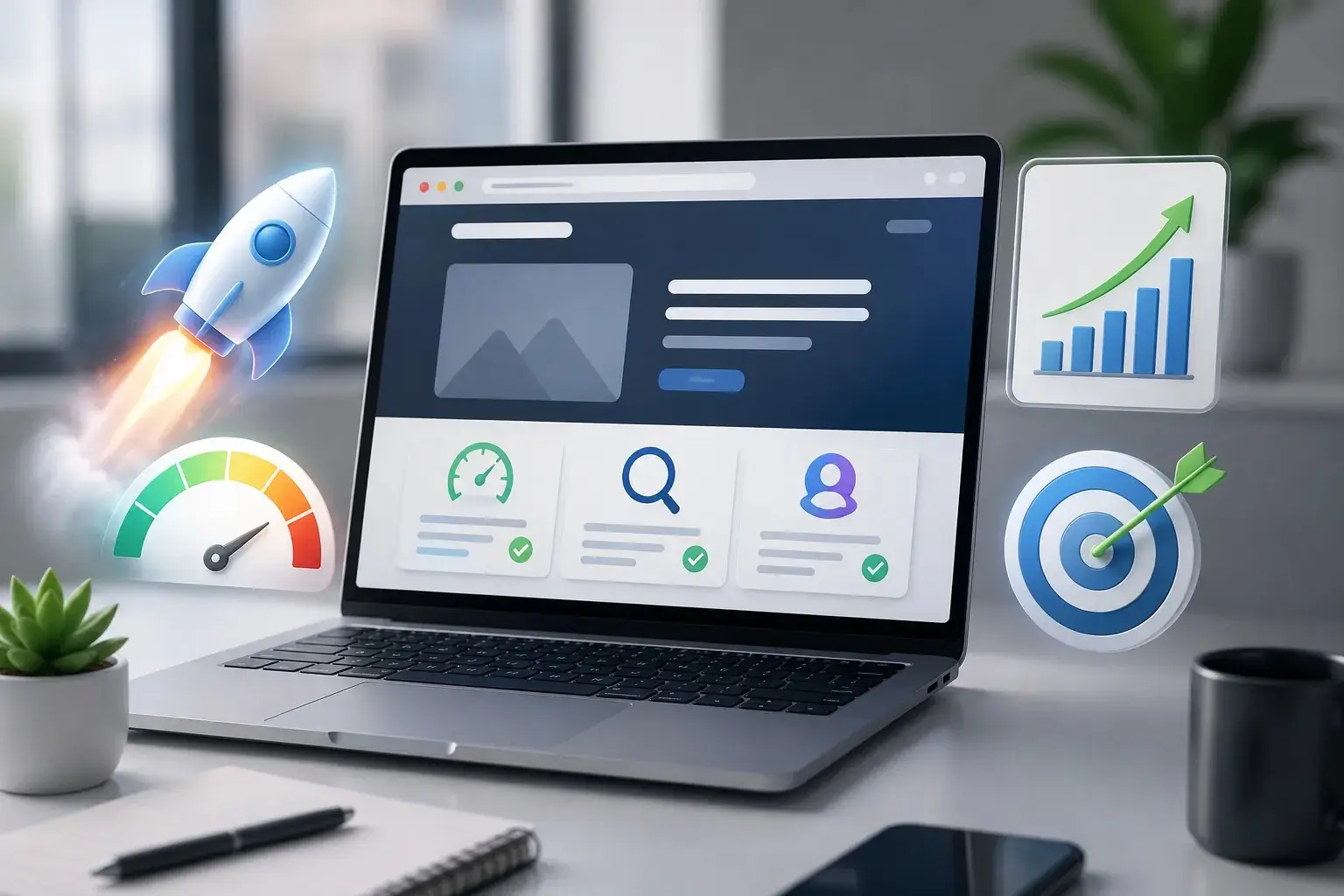
Generic claims like “high-quality” or “results-driven” don’t tell a prospective client anything, so we’d rather be specific. A professionally built WordPress website should do three measurable things: load fast enough that visitors don’t bounce before the page finishes rendering, rank for the searches your actual customers use, and convert a higher share of that traffic into leads or sales than your current site does.
Sites we build typically launch passing Core Web Vitals on both mobile and desktop, with schema markup and a clean URL structure in place before the first blog post is even written. Conversion rate optimization gets designed into the layout itself — clear calls to action, minimal form friction, fast-loading pages — rather than tacked on as a separate project later.
No honest WordPress development company will promise a #1 ranking — that’s not how search works. What we can promise is that you’re not starting the race with a technical handicap the way a lot of template-based sites do.
A benefits list is easy to fill with adjectives. Here’s what each one actually means on a WordPress build:

WordPress itself is free and open-source, so your budget goes toward design, development, and the plugins your project actually needs — not a licensing fee for the CMS. That's part of what makes affordable WordPress web design possible without cutting corners.
Your team can edit day-to-day content without calling a developer for every text change or image swap.
A theme built around your content and goals, not a generic template retrofitted to fit — the core of any true custom WordPress solutions approach.
The smallest set of well-maintained WordPress plugins that covers what you need, not a stack of overlapping tools slowing every page down.
WooCommerce website development built for real checkout conversion, not just a working "add to cart" button.
Core Web Vitals, caching, and image optimization handled during the build, not added later as a fix.
Custom WordPress website design means building a theme around your business and your customers’ path to purchase, rather than starting from a pre-built template and hoping it fits. As a full-stack WordPress development services provider, we use WordPress because it gives us the flexibility to add exactly the features a business needs — a booking system, a multi-location locator, a gated resource library — without paying for a rebuild every time a page builder’s limitations show up.
That flexibility runs through everything below: how we approach theming — whether that’s Elementor, Divi, a block-based Gutenberg theme, or a fully custom build on the underlying PHP and MySQL stack — how WordPress plugin integration works, how WooCommerce stores are structured, and how every build performs on a phone, since that’s where most of your traffic is coming from.
A drag-and-drop page builder like Elementor or Divi can get a site live fast, but it usually ships extra code your site doesn't need, which slows down every page whether you use that feature or not. A custom-coded theme is built around your actual content and layout, so there's less to load and less to go wrong. We'll tell you honestly when a well-configured page builder is the right call for your budget and timeline, and when a fully custom theme is worth the extra investment.
Plugin integration is where a lot of WordPress websites quietly accumulate problems: three plugins doing overlapping jobs, none of them properly updated. Our WordPress development work starts by mapping what your business actually needs — CRM integrations, booking tools, membership gating, custom fields — and choosing the smallest set of well-maintained plugins that covers it, backed by custom PHP where a plugin would add more weight than the feature is worth.
For product-based businesses, WooCommerce is the backbone of most WordPress ecommerce website design work, and for good reason: it’s actively maintained, integrates with most major payment gateways, and scales from a 20-product store to a catalog with thousands of SKUs. We handle checkout UX, inventory syncing, and payment gateway setup as part of any WooCommerce development engagement, with particular attention to mobile checkout — that’s where most abandoned-cart problems actually happen.
Yes — WooCommerce itself is a free, open-source WordPress plugin. What isn’t free is everything around it: hosting capable of handling ecommerce traffic, a properly licensed theme if you’re not going fully custom, and paid extensions for things like advanced shipping rules, subscriptions, or certain payment gateways. Budget for the ecosystem around WooCommerce, not just the plugin.
If you’re moving from Squarespace, Wix, Shopify, or an older WordPress install entirely, WordPress migration services are their own discipline, not a side effect of a redesign. We map every existing URL to its new equivalent with proper redirects, migrate content and metadata rather than starting from a blank page, and monitor rankings closely in the weeks after launch. A migration always carries some short-term ranking risk — the goal is keeping that dip small and short, not pretending it doesn’t exist.
We review your current site’s content, URL structure, SEO rankings, and any custom functionality that needs to carry over.
Your new WordPress site is built on a private staging environment, so your live site keeps running untouched during development.
Pages, posts, images, and metadata are migrated with 301 redirects mapped for every old URL, protecting your existing search rankings.
We review your current site’s content, URL structure, SEO rankings, and any custom functionality that needs to carry over.
We switch DNS during a low-traffic window and monitor closely for the first 48 hours to catch anything early
Placement: Keep your existing “Our Approach vs. Typical Theme-First Provider” table, but
add this pros/cons + cost/timeline table directly above it. This is the format competitors
doing well on this topic use, and it’s more scannable than prose.
| Pre-Built Theme | Custom WordPress Design | |
|---|---|---|
| Lower — theme licenses run $50– | Higher — reflects design and | |
| Upfront cost | $300 | development time |
| Timeline | Days to a few weeks | Typically 4–8 weeks depending on scope |
| Design uniqueness | Shared with every other buyer of that theme | Built around your brand alone |
| Performance | Often carries unused code/features you didn’t ask for | Lean — only what your site actually needs |
| Scalability | Can hit walls as you add custom content types or integrations | Built with growth and future features in mind |
Pre-built themes aren’t a bad choice — for a simple five-page site on a tight deadline,
they can be the right call. But once your site needs to reflect a specific brand, handle
custom functionality, or scale with your business, the limitations of a shared template
start to show up as slower pages, awkward workarounds, and a site that looks like a
dozen others in your industry
Not every WordPress design agency works the same way, and it’s worth knowing the difference before you buy. A lot of “custom” WordPress websites are really a licensed theme with your logo and colors swapped in — which isn’t necessarily bad, but it’s a different product than a fully custom build, at a different price point and with different tradeoffs.
Neither approach is automatically wrong — a theme-first build can be the right call on a tight budget and timeline. The point is knowing which one you’re actually buying.
Our streamlined process ensures effective, data-driven strategies tailored to your goals for achieving impactful digital marketing results.

We start by understanding your business goals, your current site's problems, your competitors, and your customers' actual search behavior — mapping keyword and content structure, content modeling, and page hierarchy before any page gets designed.
Wireframes and design come next, built around the content structure from discovery rather than a generic template. You'll review and approve the design direction before development starts.
We set up the WordPress CMS, structure your content types and content library, and either build out copy with you or integrate content you've already written — including image dimensions, alt text, and internal linking done properly from day one.
Before launch, every site gets Core Web Vitals optimization, schema markup, an XML sitemap, and Google Search Console and GA4 connected — the step most template-based competitors skip or gloss over.
We test across devices and browsers, check every form and integration, and confirm redirects are in place if this is a redesign. Launch is scheduled at a low-traffic time and monitored closely for the first 24–48 hours.
Launch isn't the finish line. We monitor site health, keep plugins and WordPress core updated, and — for clients on ongoing plans — keep optimizing based on real traffic and conversion data.
Most WordPress web design services describe their SEO work as “optimized for search engines” without defining what that means. A WordPress SEO partner worth hiring should be able to name the exact mechanics, not just the outcome.
Core Web Vitals are the three metrics Google uses to measure real-world page experience. Core Web Vitals optimization targets: Largest Contentful Paint (LCP) at 2.5 seconds or faster, Interaction to Next Paint (INP) at 200 milliseconds or under, and Cumulative Layout Shift (CLS) at 0.1 or lower.
Google measures all three at the 75th percentile of real visitor data, separately for mobile and desktop — meaning three out of four of your actual visitors need to hit that threshold, not just your fastest test result. A large share of sites still fail INP specifically, usually from JavaScript blocking the page while it loads, which is why we audit third-party scripts and plugin bloat before they become a speed problem.
WordPress speed optimization comes down to a few concrete mechanics: serving images in modern formats like WebP or AVIF at the correct dimensions, server-side and browser caching so repeat visitors aren’t reloading the same assets, and a CDN so visitors load your site from a server near them.
Technical SEO on every build includes structured data (schema markup, typically managed through Yoast SEO or Rank Math), a properly generated XML sitemap, and Google Search Console and GA4 connected from launch day. Schema markup is one of the more reliable ways to help both search engines and AI models cite your content correctly — increasingly relevant as generative engine optimization becomes part of how content gets discovered, not just traditional search rankings.
Before committing to any WordPress web design agency, it’s worth asking whether WordPress itself is the right call — a question most competitors skip because the answer for their business is always “yes.”
Yes, generally — WordPress gives you full control over URL structure, metadata, page speed, and schema markup, the technical levers that matter most for search visibility. The platform doesn't rank you; how it's built and maintained does.
For most small-to-midsize product catalogs, yes, through WooCommerce. If you're running enterprise-scale inventory with complex multi-warehouse logistics, a platform built specifically for that scale may fit better — an honest WordPress development company will tell you that rather than force a square peg into a round hole.
Yes. WordPress is secure when properly maintained with regular updates, quality hosting, and trusted plugins. A good WordPress development team will also include ongoing security maintenance.
WordPress currently powers a significant share of all websites on the internet, which means an enormous ecosystem of plugins, themes, and developers — but it also means security and maintenance discipline matter more, not less, because it’s a common target.
Choose a custom WordPress website package designed for your business. Every plan includes responsive design, SEO-friendly development, fast-loading speeds, and ongoing support without hidden fees.
Best for new and local businesses that need a clean, professional site fast
Best for growing businesses that need more pages and a real content structure
Best for businesses ready to sell online or scale past a brochure site
Does it cost money to make a website? Yes — even a WordPress build, where the core software itself is free, has real costs: design and development time, a theme (custom or licensed), hosting, and any premium plugins your site needs. What actually drives WordPress website design pricing up or down is scope, not the platform: the number of unique page templates, whether you need custom functionality like WooCommerce or a booking system, how much content needs to be written versus migrated, and how fast you need to launch.
Hosting cost varies too — shared hosting is the cheapest way to host a site, but for a business site, managed WordPress hosting (WP Engine and similar providers) is usually worth the difference in speed and support. Affordable WordPress web design services don’t have to mean a stripped-down build; it usually means scoping the project tightly around what actually moves the needle for your business first.
A website is a maintained asset, not a one-time purchase, and this is where most WordPress web design services get vague. “Maintenance” as a bullet point without specifics doesn’t tell you what you’re actually paying for.
Retained WordPress support services exist because unmaintained WordPress sites are one of the most common security targets on the internet, not because we’re padding an invoice.
A new WordPress website is a strong foundation, but long-term success comes from the services that support it. Many businesses combine web design with ongoing marketing, maintenance, and optimisation to attract more visitors, generate more leads, and keep their website performing at its best.
Our affordable web design services deliver fast, responsive, and SEO-friendly websites tailored to your business goals. Get a high-quality website that looks great, performs well, and fits your budget.
Build custom software and SaaS solutions designed to streamline operations, improve efficiency, and support your business as it grows.
Drive more traffic, leads, and sales with affordable digital marketing and PPC services tailored to maximise your return on investment.
Stop paying for agency overhead and start investing in measurable growth with a team that operates at the speed of your ambition.
We’ve been building WordPress websites since 2018, and we’ve now completed more than 500 projects for businesses across the US. Every site is designed and developed by our in-house team, so you’re working directly with the people building your website, not a rotating cast of freelancers. That means faster turnaround, clearer communication, and a team that actually understands your project from start to finish.
What Our Clients Say About Working With Nexvertise Digital.
Our old site was built on Wix and every time we wanted to add a page, we had to redo half the layout. The WordPress site Nexvertise built us is actually ours now. Our office manager updates the blog every week without calling anyone.
Owner, Riverside Family Dentistry, Columbus OH
We run a small landscaping crew and our old website took forever to load on phones, which is where most of our calls come from. The new WordPress build fixed that completely. We started showing up on the first page for our town's name within a couple months.
Owner, GreenScape Lawn & Landscape, Charlotte NC
I was skeptical about WordPress because our last one got hacked twice. This team set everything up properly with security and backups built in from day one. Two years in and we haven't had a single issue.
Founder, Bloom Boutique, San Diego CA
We needed a site that could handle a growing product catalog without slowing down. WooCommerce on WordPress ended up being the right call. Checkout is smooth now and our return customers have actually noticed the difference.
Owner, Ironclad Supply Co., Pittsburgh PA
WordPress web design services cover the planning, design, development, and ongoing support of a website built on the WordPress CMS — including custom theme design, plugin integration, WooCommerce for ecommerce, technical SEO setup, and post-launch maintenance.
For most small-to-midsize business, ecommerce, and content-driven sites, yes. WordPress gives full control over URL structure, page speed, and schema markup, and its plugin ecosystem covers nearly any feature a business site needs.
Through clean, editable URL structures, fast-loading themes, schema markup plugins like Yoast SEO or Rank Math, and full control over Core Web Vitals — all technical levers that influence search visibility.
Yes. WooCommerce development covers product catalogs of any size, mobile-optimized checkout, inventory syncing, and payment gateway setup.
A typical custom build runs 6–12 weeks depending on scope, custom functionality, and how much content needs writing versus migrating. A theme-based build can move faster.
By starting from your content structure and business goals rather than a pre-built template, so layout and design decisions are built around your actual customers' path to purchase.
Ask to see a comparable project in your industry and a specific breakdown of scope and timeline — a good fit shows you real, relevant work, not just a generic pitch.
A page builder gets a site live faster and is easier to self-edit, but ships extra code your site doesn't use. A custom-coded theme loads only what your pages need.
Elementor is a drag-and-drop WordPress page builder. Yes — whichever tool we use, you'll get CMS training scoped to what your team needs to edit.
Through a dedicated project contact and scheduled check-ins at each process stage — discovery, design approval, and pre-launch review.
Yes, every build includes CMS training scoped to what your team actually needs to edit.
Yes — that's the point of the CMS setup and training. Day-to-day content edits don't require code.
No — we can write it with you or integrate content you've already written; either way, it gets structured properly for SEO during CMS setup.
Yes, via CRM integrations, booking tools, membership gating, and custom fields, chosen to avoid overlapping or bloated plugins.
Migration carries some short-term ranking risk, minimized through proper URL mapping, 301 redirects, and close post-launch monitoring.
Cost depends on scope rather than the platform — page templates, custom functionality, content volume, and timeline all move the number. We provide a project-specific quote.
Typically a project fee for the build, billed in milestones, with maintenance and support plans billed separately on a recurring basis.
Separate — an ongoing plan covering updates, security patching, backups, and uptime monitoring.
The technical SEO foundation (Core Web Vitals, schema, sitemap, Search Console/GA4 setup) is included in every build. Ongoing content and link-building SEO is a separate service.
Yes, through maintenance and support plans covering updates, security, backups, and monitoring.
Yes, additional WordPress landing page design and new page builds are common ongoing requests.
Yes — every build is mobile-first by default, with accessibility reviewed against WCAG 2.2 and general ADA compliance expectations.
Yes, white-label WordPress development and design capacity is available for agencies that need it.
If you’ve read this far, you already know more about what a good WordPress web design service should include than most agencies will tell you upfront. Tell us about your project and we’ll respond with a real scope and price range within one business day — no obligation, no sales script.