
Ecommerce Web Design Services in the USA
If you’re searching for ecommerce web design services because your store gets traffic but not sales, you’re not alone. Carts get abandoned, product pages lose shoppers before checkout, and slow load times cost you the sale. We build custom online stores for US businesses on Shopify, WooCommerce, Magento, and BigCommerce: fast, secure, and built on SEO architecture from day one.
Free consultation · Fixed price agreed before work starts · No obligation
*Get your free
ecommerce quote*
Since
customers served
Nationwide across the USA
support coverage
What These Services Cover
Ecommerce web design services cover the design and build of an online store, storefront, product and category pages, cart and checkout, plus the technical work underneath: site speed, mobile layout, payment integration, security, and the site structure search engines use to index your products.
Most online stores don’t have a traffic problem. They have one of these:
● Product pages that answer the wrong questions, and lose the shopper before the add-to-cart
● A checkout that leaks: average cart abandonment sits around 70%, much of it caused by friction you control
● Load times that cost the sale, before the page finishes rendering
We fix the store itself.
What's Included in Our Ecommerce Website Design Services
Every build includes all seven. None of it is an upsell after the fact.
Conversion-Focused UX and CRO
We design the path from landing to confirmed order, then remove what interrupts it. Tracking is configured from day one, so post-launch decisions come from your data, including what drives repeat customers, not just first orders.
Product and Category Page Design
Consistent product detail page templates: clear imagery, readable specs, honest stock and delivery info, visible reviews, an add-to-cart that stays reachable. Category pages built to rank and to filter properly.
Secure Payment and Checkout
Stripe, PayPal, Square, Apple Pay and Google Pay integrated into a short checkout that's honest about total cost early. Built against the PCI Data Security Standard, how much of that burden falls on you depends on your platform, and we'll tell you which before you choose.
SEO Architecture, Speed and Core Web Vitals
Crawlable category hierarchy, clean URLs, canonical rules, and product structured data so search engines and AI answer engines can read your prices and stock directly. Built to Google's Core Web Vitals thresholds: LCP under 2.5s, INP under 200ms, CLS under 0.1, and verified on product and category pages, not just the homepage.
ADA and WCAG 2.1 AA Accessibility
Colour contrast, keyboard-navigable checkout, proper heading structure, labelled fields, meaningful alt text. Designed in from the start costs nothing extra; retrofitting later doesn't.
Inventory Management, CMS and Integrations
Stock sync, shipping and fulfilment, accounting and tax, email and CRM, ERP and PIM where you run one, plus a store your team can actually operate without calling us.
Analytics, QA and Post-Launch Optimization
Cross-device and live payment testing before launch. After launch, verified revenue tracking and ongoing A/B testing on the pages that matter. Most agencies stop at launch. Launch is where the useful information starts.
Ecommerce Platforms We Design For
We build on all four and we’re tied to none of them, which means we can tell you when the one you’re leaning toward is the wrong fit.
Shopify Ecommerce Web Design
Hosted, so the platform handles maintenance, security and most of the card-data compliance. Fastest route to a reliable live store.
Best for: fast growth and heavier traffic.
WooCommerce Ecommerce Web Design
Runs on WordPress, so your store and site are one system and you own the whole installation. Pairs with our WordPress web design services.
Best for: content-driven brands already on WordPress.
Magento Ecommerce Web Design Adobe Commerce
The deepest catalog and pricing logic of the four, and the most expensive to build and run. We'll say plainly when you don't need it.
Best for: large catalogs, multi-storefront, serious B2B rules.
BigCommerce Ecommerce Web Design
Hosted convenience with more built into the core, so you lean less on paid apps. Supports headless setups.
Best for: fast growth and heavier traffic.
Which Ecommerce Platform Is Right for Your Business?
| If this sounds like you | Start with | Why |
|---|---|---|
| First store, want to be selling soon, standard catalog | Shopify | Secure by default, fastest launch, minimal technical overhead |
| Already on WordPress, publish content, want to own everything | WooCommerce | One system for site and store, no platform fee, full control |
| Large or complex catalog, multiple storefronts, B2B pricing | Magento | Deepest catalog logic; highest build and running cost |
| Growing fast, want hosted convenience with fewer add-ons | BigCommerce | Strong built-in feature set, handles scale, headless-ready |
A starting point, not a verdict. Your integrations and where your product data lives matter just as much. We work through it in discovery, before anyone commits.
Not sure which platform fits your catalog?
Tell us what you sell, and we’ll give you a straight recommendation, free, and with no obligation to hire us.
Why Choose Nexvertise Digital as Your Ecommerce Web Design Company
Building websites for US businesses since 2018, across retail, food service, e-learning, logistics, marketing and publishing.
Built for Small Businesses, Startups and Growing Brands
Agencies with real technical depth are usually built for enterprise and priced that way. Agencies cheap enough for a small retailer usually hand you a theme. We work in the gap, same Core Web Vitals targets, same accessibility standard, same secure checkout, scoped to a budget that makes sense. Not selling online yet? Start with our small business web design services.
Direct Access to the People Building Your Store
You talk to the strategist and developers on your project, not an account manager relaying messages. Faster for you, better decisions for the build.
24/7 Coverage Across US Time Zones
A follow-the-sun schedule means work continues outside US business hours and urgent issues don't wait for a morning that's nine hours away. We serve every state, no local office required.
What to Look for in an Ecommerce Web Design Agency
Use this on us, and on everyone else you’re considering:
- Do they name a platform recommendation, or agree with whatever you suggest? A real ecommerce web design agency will talk you out of the wrong platform.
- Is accessibility and Core Web Vitals work included, or quoted separately later?
- Who owns the code, content and data at the end?
- Is migration priced into the quote, or discovered mid-project?
- Do they show results, or only logos?
- Can you speak to the people building it?
Sites We've Built That Rank and Convert
Every project starts with a business problem, not a color palette. One client needed a site that could handle a growing product catalog without slowing to a crawl. Another needed a WordPress website redesign that would finally show up on page one for their core service keywords, not just look better than the old one. Both are the kind of problem custom WordPress website design is actually built to solve.
This is where a real portfolio belongs: screenshots, live links, and, where clients have agreed to share them, actual traffic or conversion numbers. We’d rather show a handful of verifiable results than a wall of vague “beautiful design” claims that don’t tell you anything about outcomes.

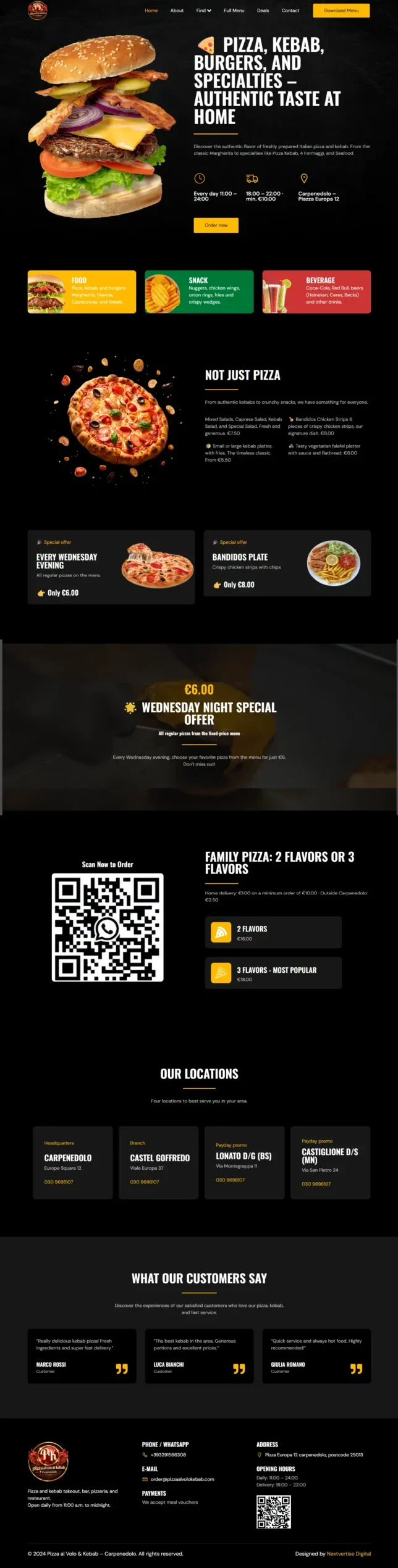
Pizza Al Volo Kebab
Local restaurant needed fast mobile ordering; built a high-speed, custom WordPress menu.
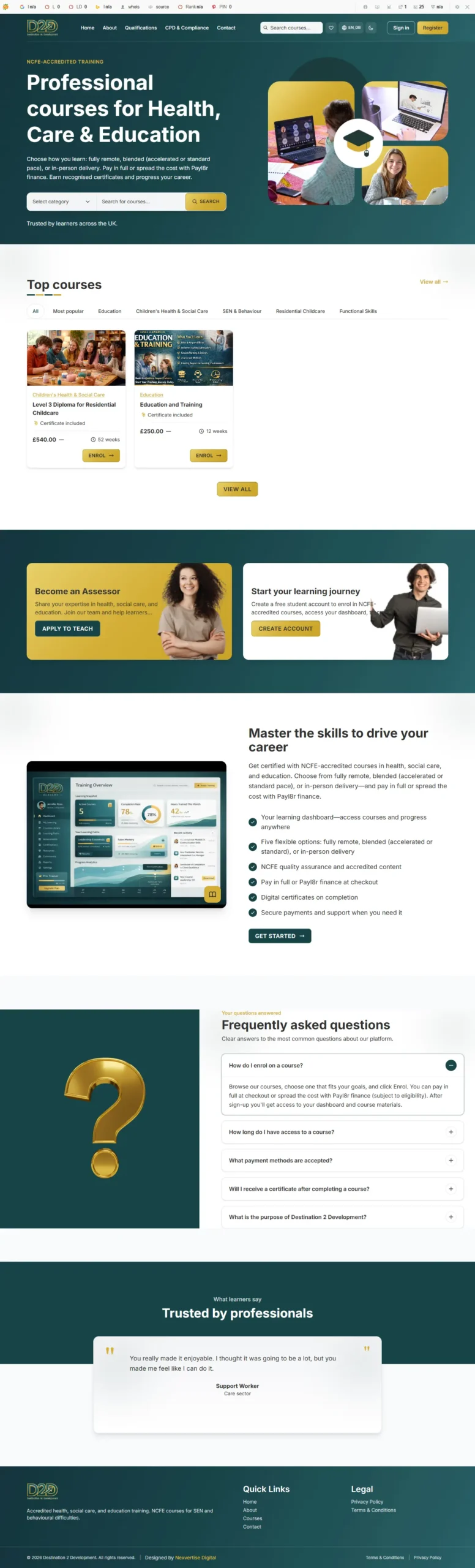
D2D
Training platform required seamless enrollment; custom WordPress build boosted sign-ups by 40%.

Hannah O'Neill Marketing
Marketing consultant lacked clear lead generation; engineered a sleek WordPress site doubling conversions.
If you’re comparing WordPress web design services to find the best fit rather than the first agency that shows up, ask to see a project similar to your own industry, we can usually point to at least one comparable build from recent work.
Our Ecommerce Web Design Process
How long does it take? A customized theme build typically runs 2-3 weeks; a custom build with migration and integrations runs 4-6 weeks. The biggest variable is usually product content, stores with photography and descriptions ready launch materially faster.
01.
Strategic Discovery
We map your goals, audit your catalog and current site, and review who's ranking above you. You get scope, timeline and a fixed price before any design work starts.
02.
Architecture and Design
Information architecture and category structure first, then wireframes for home, category, product, cart and checkout, then visual design. You sign off at each stage.
03.
Agile Execution
Built in sprints with working previews you can click through, not six weeks of silence. Product import, integrations, QA, accessibility and live payment testing all happen here.
04.
Global Launch and Scale
Redirect mapping, pre-launch checks, launch, then verified analytics and post-launch optimization.
How Much Do Ecommerce Web Design Services Cost?
US ecommerce web design runs from a few hundred dollars for a template setup to six figures for enterprise builds. Our projects start at [VERIFY: real starting price], quoted as a fixed price after discovery.
We publish a starting figure because vague pricing wastes everyone’s time. If your budget and our range don’t meet, we’d both rather know in the first conversation.
What Drives the Price
- Catalog size and complexity: 40 simple products is a different build from 4,000 with variants and bundles
- Custom build vs. customized theme: the single largest cost lever
- Platform: Magento costs meaningfully more than Shopify or WooCommerce at comparable scope
- Integrations: Each ERP, CRM, shipping or subscription connection adds build and testing time
- Migration scope: Moving products, customers, orders and redirects is real work, priced separately
- Content readiness: Whether product photography and descriptions exist and are usable
Full packages across all services are on our pricing page.
Affordable Ecommerce Web Design Services Without Cutting Corners
Affordable ecommerce web design services should mean a fair price for real work, not a stripped build that needs replacing in eighteen months. Our pricing can be significantly lower than comparable US agencies because of how we’re structured, not what we leave out. Core Web Vitals targets, accessibility, secure checkout and SEO architecture are in every build at every price point.
Get a fixed price before you commit to anything.
Tell us what you sell and what your current store does badly. We’ll come back with a platform recommendation, scope and price, and if we’re not the right fit, we’ll say so.
Custom Ecommerce Development for Growing Stores
Custom ecommerce development means building your store’s functionality around how your business actually sells, instead of reshaping your business to fit a theme’s assumptions. Our custom ecommerce web design services cover product page templates, catalog and pricing logic, bespoke checkout flows, and direct integrations with the systems you already run.
Custom Build vs. Off-the-Shelf Theme
| Feature / Aspect | Customized theme | Custom build |
|---|---|---|
| Best for | First store, standard catalog, tight budget | Distinctive brand, complex catalog or workflows |
| Design flexibility | Strong, within the theme’s structure | No structural constraints |
| Build time / cost | Shorter, lower | Longer, higher |
| Performance | Depends on theme bloat and app count | Controlled, you ship only what’s used |
| As you scale | May need a rebuild | Extends with the business |
We’ll tell you which one your project needs, including when the answer is the cheaper one.
Customized Ecommerce Solutions for Large Product Catalogs
Large product catalogs break predictably: filtering slows, category pages sprawl into near-identical URLs, search returns the wrong products, and the admin becomes unusable for whoever updates it each morning. We build faceted filtering that doesn’t generate indexable junk, templates that stay consistent across thousands of items, and bulk editing your team can run without a developer.
B2B and B2C Ecommerce Builds
B2B stores need customer-specific pricing, volume discounts, quote requests instead of instant checkout, net terms and restricted catalogs. We build both and scope them differently, running B2B and consumer buyers through one generic checkout is a common reason a B2B store underperforms.
How We Redesign Without Losing Rankings
Ranking losses after a redesign almost always trace to the same causes: URLs changed without redirects, category content stripped out, speed regressions, or a staging site left indexable. We crawl and export the existing site first, map every URL with traffic or links to its destination, keep the content that’s earning rankings, and monitor Search Console through launch. Brief fluctuation is normal. A sustained drop isn’t, and it’s preventable.
Ecommerce Website Redesign and Platform Migration
If you already have a store, the risk isn’t building something new, it’s losing the rankings and revenue the current site already earns.
Ecommerce Web Design Agency Testimonials
What Our Clients Say About Working With Nexvertise Digital.
Ranking losses after a redesign almost always trace to the same causes: URLs changed without redirects, category content stripped out, speed regressions, or a staging site left indexable. We crawl and export the existing site first, map every URL with traffic or links to its destination, keep the content that's earning rankings, and monitor Search Console through launch. Brief fluctuation is normal. A sustained drop isn't, and it's preventable.
Founder & E-commerce Business Owner
We needed a site that could handle a growing product catalog without slowing down. WooCommerce on WordPress ended up being the right call. Checkout is smooth now and our return customers have actually noticed the difference.
Owner, Ironclad Supply Co., Pittsburgh PA
Our Services
We provide affordable web design, WordPress development, SEO, and digital solutions that improve search visibility, attract the right audience, and turn website traffic into measurable business growth.
WordPress Website Design Services
A website that's yours to control. Our WordPress designs are fast, SEO-ready, and fully customizable, giving you enterprise-level functionality at a fraction of the cost.
Affordable Web Design Services
Affordable web design services for small businesses, startups, and entrepreneurs. We build professional, mobile-friendly websites that are fast, SEO-friendly, easy to manage, and designed to attract visitors, generate leads, and support your online growth.
Custom Website Design Services
Custom websites designed around your brand, business goals, and customers. We create fast, mobile-friendly, SEO-ready websites with a unique design, intuitive user experience, and the flexibility to grow with your business.
Ecommerce Web Design FAQs
US projects run from a few hundred dollars for a template setup to six figures for enterprise builds. Ours start at [VERIFY: price], quoted as a fixed price after discovery.
A customized theme build typically takes [VERIFY: range]; a custom build with migration takes [VERIFY: range]. Product content readiness is the biggest variable.
Because "ecommerce website" covers wildly different products, and cheaper quotes often exclude content, migration, accessibility and support. Compare scope line by line, not totals.
DIY is cheaper upfront and fine for testing an idea. An agency pays off once the store is a real revenue channel and a point of conversion rate is worth more than the build cost.
Shopify for most first stores, WooCommerce if you're already on WordPress, BigCommerce if you're scaling fast. Magento only for large or complex catalogs.
Both, we recommend based on your catalog and budget, not our margin. What we don't do is reskin a marketplace theme and call it custom.
Building your store's functionality around how your business actually sells, rather than stacking paid apps onto a theme that assumes something else.
Yes, through WooCommerce, especially if you already publish content there. You own everything; you're also responsible for hosting, updates and security.
Yes. The critical part isn't moving products. It's moving customers, orders and reviews intact and mapping every existing URL to its new destination.
Not if redirects are mapped and ranking content is preserved. Brief fluctuation after launch is normal; a sustained drop is preventable.
Redesign when the foundation is sound. Rebuild when the platform or theme can't support where the business is going. We audit before recommending either.
The technical and structural side, yes, architecture, URLs, structured data, Core Web Vitals. Ongoing content and link building is a separate service.
Yes, designed mobile-first and tested on real devices, with particular attention to checkout, where mobile friction costs the most orders.
Stripe, PayPal, Square, Apple Pay, Google Pay, platform-native options like Shopify Payments, and specialist gateways where your business needs one.
Google's page experience measures: LCP under 2.5s, INP under 200ms, CLS under 0.1. They track exactly the moments where shoppers give up.
Accessibility lawsuits are a documented risk for US retailers and WCAG 2.1 AA is the usual benchmark. We build to it, confirm your specific obligations with an attorney.
Yes — ERP, PIM, CRM, email, accounting, tax, shipping and subscription billing. We confirm which need custom API work during discovery.
Yes, design, code, content, customer and order data, plus full admin access and account handover. Worth asking every agency you shortlist.
Yes: platform updates, security monitoring, backups, performance checks and fixes, plus optional conversion optimization and A/B testing.
Your product data as it stands, brand assets, access to any current site and analytics, and a picture of how you sell. You don't need a finished brief.
B2C (retail), B2B (account pricing and purchase orders), C2C (marketplaces) and D2C (manufacturer direct). Each needs a different buying path.
Mobile-first design, fast product and category pages, working search and filtering, a short secure checkout, self-editable CMS, inventory management, SEO structure and accessibility.
For testing an idea, possibly. They don't reliably handle catalog structure at scale, integrations, accessibility or performance. We use AI in our own workflow. It speeds us up, it doesn't replace the judgement.
Get Your Free Ecommerce Web Design Quote
Tell us what you sell, roughly how many products you have, and what your current store does badly. We’ll come back with the platform we’d recommend, what the build involves, and what it costs, as a fixed price, before you commit to anything.
If we’re not the right fit for your project, we’ll tell you that too.